Showing posts with label illustration. Show all posts

Monday, January 21, 2013

A Great Writer ~ Martin Luther King

Photobucket

I have a dream that one day on the red hills of Georgia,
the sons of former slaves and the sons of former slave owners
will be able to sit together at the table of brotherhood.
– Martin Luther King, "I Have a Dream"


Today we celebrated the legacy of the late Reverend Martin Luther King, even more meaningful this year because it was also the second Presidential Inauguration Day for Barack Obama. Yes, a black man was elected President not once, but twice. And the crowds cheered on the Mall in Washington D.C., as they did for Rev. King when he delivered his "I Have a Dream Speech" fifty years ago this year.

Martin Luther King Quotes on Goodreads

Text of Martin Luther King's Speeches with Audio and some Video

That historic "I Have a Dream" speech is a beautifully illustrated book for children by Kadir Nelson:


Random House Children's Books (RandomHouse.com/Kids) announces the publication of the highly anticipated picture book, I HAVE A DREAM, Martin Luther King, Jr.'s celebrated speech illustrated with exquisite paintings by celebrated artist and Caldecott Honor winner Kadir Nelson (On sale October 9, 2012 / $18.99). Published by the Schwartz & Wade Books imprint, the package includes an audio CD of King's original speech as given on August 28, 1963 at the Lincoln Memorial during the March on Washington.

"My father's dream continues to live on from generation to generation," said Dr. Bernice A. King. "This beautiful and powerful illustrated edition of his world-changing "I Have a Dream" speech brings his inspiring message of freedom, equality, and peace to the youngest among us-those who will one day carry his dream forward for everyone."

Nelson's oil paintings magnificently capture the power and emotion of Dr. King's words, resulting in a poignant depiction of that memorable occasion.

Publishers Weekly raves in a starred review, "There's something exhilarating about viewing Nelson's paintings of Dr. King and the March on Washington while reading the words of the speech King gave that day; it's hard to imagine a better representation of their historical significance."

Nelson selected the most iconic passage of Dr. King's speech to illustrate in I HAVE A DREAM. The full text is provided at the end of the book.

I HAVE A DREAM will join Dr. King's legacy and help lay the groundwork for teaching a new generation of young children about one of our nation's most celebrated historical figures.

As we approach the 50th anniversary of MLK JR.'s iconic speech on August 28, 2013, I HAVE A DREAM will be part of conversations throughout 2013 at multiple milestones leading up to it, including King's birthday in January; Black History Month in February and the Letter from Birmingham Jail anniversary in April.

Random House will simultaneously release a Read & Listen ebook edition that gives readers the unique experience of listening to Dr. King's inspiring voice while reading along and following Nelson's exquisite illustrations.

DR. MARTIN LUTHER KING, JR. (January 15, 1929-April 4, 1968) was a clergyman, activist, and prominent leader in the American civil rights movement. In 1964, King became the youngest person to receive the Nobel Prize for his work to end racial segregation and discrimination through nonviolent means.

Please visit www.thekingcenter.org for more about Dr. King, his work and life.

KADIR NELSON is the acclaimed illustrator of Moses: When Harriet Tubman Led Her People to Freedom and Henry's Freedom Box: A True Story from the Underground Railroad, both Caldecott Honor books. His other titles include We Are the Ship, a Robert F. Sibert Medal winner and Coretta Scott King Award recipient, and Heart and Soul: The Story of America and African-Americans.

Friday, June 22, 2012

Edward Gorey Exhibit at Columbia University

Photobucket


Andrew Alpern has been collecting Edward Gorey's books, artwork, and other "ephemera" for 40 years, and he was a friend of the writer. Now he has donated 700 items to Columbia University where they are staging a show to honor Gorey.

From the Columbia Rare Book and Manuscript Library: Gorey Preserved

Kempner Gallery
March 5 - July 27, 2012

The Rare Book and Manuscript Library presents a major exhibition of works by the idiosyncratic illustrator, designer, and writer, Edward Gorey (1925-2000). The exhibition draws from the large and important collection of Gorey's works donated to the Columbia University Libraries by noted architectural historian Andrew Alpern in 2010.

PhotobucketPhotobucketPhotobucket


The extensive collection, which contains over 700 items, includes nearly every edition of every work published by Gorey, in addition to illustrations for dust jackets and magazines, etchings, posters, and design ephemera. By any measure, this is a major gathering of Gorey's work.

The exhibition also includes original, limited edition etchings, posters, books written and illustrated by Gorey, books written by others but illustrated by Gorey, books whose cover art was created by Gorey, foreign translations of Gorey books, postcards and Christmas cards, theater-related materials, Dracula-related materials, LP record jackets and CD cover art, Metropolitan Opera and New York City Ballet-related items, various stuffed creatures, photographs of Gorey, and a fur parka that he owned.

Photobucket


During the panel discussion, Alpern also contributed some of his memories to fill out Gorey’s personal side. He described Gorey’s effortless and encyclopedic knowledge of books and movies, his “low-key” charm, and his distinctive fashion (fur coat, scarf, big beard, high-top sneakers). He remembered a particular visit to Gorey’s home in Cape Cod when they drove around in Gorey’s yellow Volkswagen Beetle with the license plate that read OGDRED—from another pseudonym, Ogdred Weary.

PhotobucketPhotobucketPhotobucket


Alpern took issue with several obituaries of that described Gorey as “macabre”; while some of Gorey’s art was dark, he said, the man was anything but. Alpern remembered him this way: “Friendly, outgoing, often outrageous, enthusiastic, with a voice that soared and swooped all over the octaves, and expressive hands and fingers that reinforced his words with elaborate gestures, and heavy, clanking rings. Edward was nothing if not instantly noticeable, with a distinctively odd appearance, and equally odd attitudes and ideas: perhaps the quintessential New Yorker in that regard.”

Photobucket


Monday, May 21, 2012

Classics Illustrated Comics Coming to EBooks


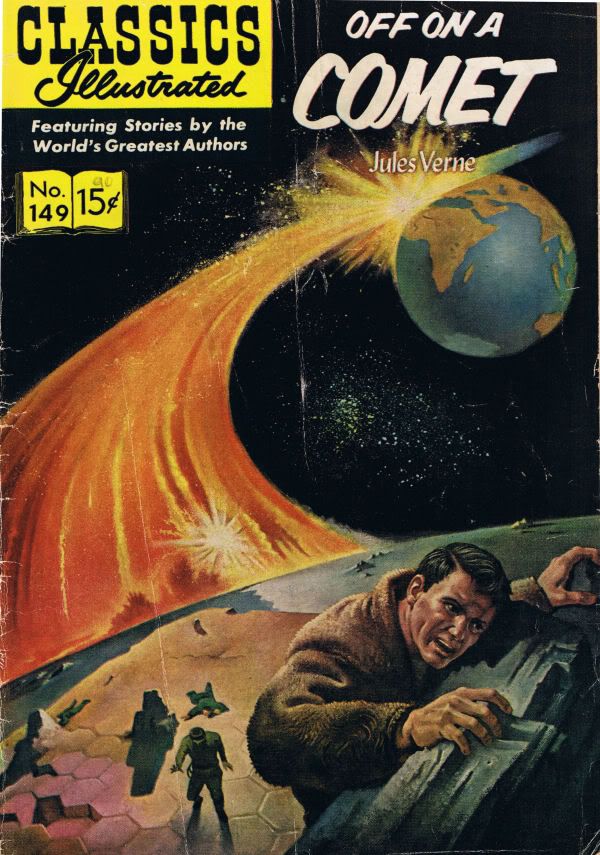
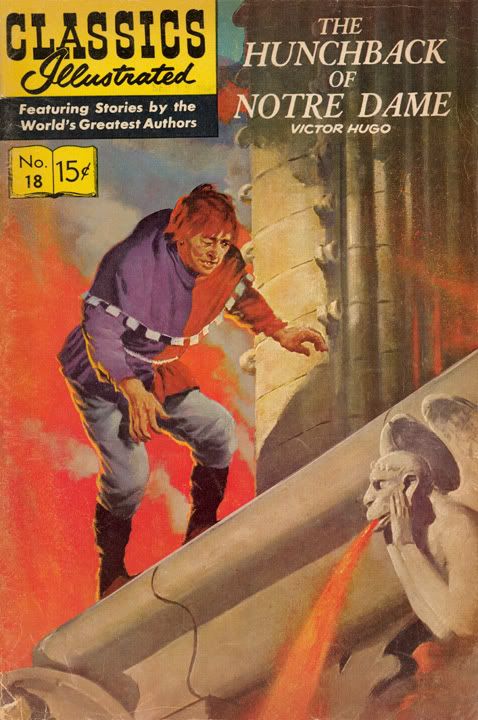
I remember these literary comic books from my childhood in the sixties! The illustrations were awesome and really piqued my imagination. The covers above and below were two that my brothers had around the house, and I am so glad this series is being recovered and introduced to a new generation.

From Publisher's Weekly
Trajectory Inc., a Boston-based e-book and app developer and publisher, has acquired the digital rights to the original Classics Illustrated comics and will release the works as downloadable digital comics for the iPad, iPhone and iPod touch. The digital series includes over 123 titles selling for $4.99 each from the original comic book series and features such classic works as Snow White, Treasure Island, the Tree Musketeers, Uncle Tom’s Cabin, Gulliver’s Travels and many others.
The original Classics Illustrated comics series began publishing in 1941 and was created by Albert Kanter. The series featureds extremely abridged versions of classic works of literature with the original comic books varying from 64 pages to about 48 in later years. Kanter originally hoped the popularity of comics books—the comic book format we know today had essentially just been invented—would introduce young people to high literature and quality reading...
In a phone interview, Scott Beatty, publisher of Trajectory Inc. said that he was a fan of the original Classic Illustrated comics and remembers, “my dad had a box of Classic Illustrated comics that I found and I wondered if anyone was doing digital versions.” Beatty acquired the digital rights from First Classic Comics, the entity that owns the rights to the series, and said he had to “track them down, but they were happy to license the rights.”

Tuesday, May 8, 2012

R.I.P. Maurice Sendak


Photobucket
Photo by Spencer Platt/Getty Images via Slate


Maurice Sendak has died at the age of 83.
Obituary from Reuters
Sendak died in Danbury, Connecticut, from complications from a recent stroke, the Times was told by Sendak's long-time editor, Michael di Capua. Sendak had lived in nearby Ridgefield, Connecticut.
Sendak, who was born in Brooklyn in 1928, illustrated more than 50 books during his career and won a number of prizes for his drawings. The Swedish government awarded him the Hans Christian Anderson Award for children's book illustration in 1970.

He was a genius of children's literature although he proclaimed that he merely wrote for himself and never thought about the audience, and that's probably why kids of all ages found his books to be refreshing and profound.


I found this great quote on Goodreads
“Once a little boy sent me a charming card with a little drawing on it. I loved it. I answer all my children’s letters — sometimes very hastily — but this one I lingered over. I sent him a card and I drew a picture of a Wild Thing on it. I wrote, “Dear Jim: I loved your card.” Then I got a letter back from his mother and she said, “Jim loved your card so much he ate it.” That to me was one of the highest compliments I’ve ever received. He didn’t care that it was an original Maurice Sendak drawing or anything. He saw it, he loved it, he ate it.”

He was interviewed at length by Bill Moyers for PBS back in 2004 - full transcript here - and spoke of many things including the background of Where the Wild Things Are. I've always found this fascinating because it is counterintuitive to what most people consider the "nice" thoughts one needs for writing a children's classic:
 MOYERS: Why did you write WHERE THE WILD THINGS ARE?

SENDAK: I don't know. I don't have an answer. Let me tell you of its origin — it's brief. I had done a series of books and in those days back in the '50s, you couldn't do a picture book unless you'd done a number of books that paid off somewhat or at the very least showed that you had more talent. And you can move onto the next.

There's not much money back then. I don't think Madonna would have been interested in writing a book in the '50s, okay? So, it was my turn. I had earned my 10 years apprenticeship of doing any number of books. Now, I could do a book. And my editor's name was Ursula Nordstrom. And she without equivocation was the best.

She was this torrential woman, passionate woman, who could spot talent 10 miles away. I had no education. I did not go to art school. My drawing was so crude. I had shines on shoes like in Mutt 'n' Jeff in Walt Disney. And she saw through that monstrous crudity and cultivated me, really made me grow up. And then, it was time to do my own picture book.

And I came to her with a title that was "Where the Wild Horses Are." And she just loved that. It was so poetic and evocative. And she gave me a contract based on "Where the Wild Horses Are." And then, it turned out after some very few months to her chagrin and anger, I couldn't draw horses. The whole book would have to be full of horses to make the book make sense.

And when I tried a number of things, I remember the acid tones. She said, "Maurice, what can you draw?" Okay. Cause she was investing in a full color picture book. That was an enormous thing back then.

Photobucket

And so, I thought well things, things. Could be anything I could draw without negotiating things I can't draw. And then, we were at… someone had died. My brother, sister and I were sitting shiva, the Jewish ceremony.

And all we did was laugh hysterically. I remember our relatives used to come from the old country, those few who got in before the gate closed, all on my mother's side. And how we detested them. The cruelty that children… you know, kids are hard.

And these people didn't speak English. And they were unkempt. Their teeth were horrifying. Nose… unraveling out of their hair, unraveling out of their noses. And they'd pick you up and hug you and kiss you, "Aggghh. Oh, we could eat you up."

And we know they would eat anything, anything. And so, they're the wild things. And when I remember them, the discussion with my brother and sister, how we laughed about these people who we of course grew up to love very much, I decided to render them as the wild things, my aunts and my uncles and my cousins. And that's who they are.

Photobucket

MOYERS: So, the wild things are your extended…

SENDAK: Relatives. They're…

MOYERS: Jewish relatives.

SENDAK: Jewish relatives.

MOYERS: With the WHERE THE WILD THINGS ARE, it created a big sensation. I mean, librarians would not put it in the… in fact, there's one librarian who said, "This is not a book you leave in the presence of sensitive children to find in the twilight."

SENDAK: Yes. There was a torrent of, "Keep this book away from children. This is…"

MOYERS: Why?

SENDAK: I think probably it was the first American children's book — God knows I didn't set out to do this, it was my first picture book. But, I was talking about kids I knew and me. A book, an American book, where the child actually daunts his mother and threatens her.

No way. No way. And then on top of that, she puts him in a room and denies him food. No way. Mamas never do that kinda thing. Kids never get pissed at their parents. Unheard of. And the worst offense, he comes home. She leaves food for him. And he's not punished. Not punished.

MOYERS: When you had Max get mad at his mother knowing… did you know that this was going to enrage people? That they…

SENDAK: No. My mother got mad at me all the time. It didn't seem an extraordinary thing at all. I mean, it seemed to me she was always mad. And in Yiddish, she called me the equivalent of "wild thing" and chased me all over the house.

We used to hide in the street and hope she forgot before I crept up in the evening. It was all natural as your father took swipes at you that you dodge. And your mother was rough, rough, rough.

Photobucket


MOYERS: Were you ever sent to bed without supper?

SENDAK: I often went to bed without supper cause I hated my mother's cooking. So, to go to bed without supper was not a torture to me. If she was gonna hurt me, she'd make me eat. That's true, too.

But, it was a really unkempt, unruly small apartment, three children, father who worked so hard, mother who had problems emotionally and mentally. And we didn't know that. Your mommy's supposed to be perfect.

She should be there for you, love you, kiss you. Every movie we ever saw, Claudette Colbert hugging her children. We knew what it should be like. And it wasn't. And we had no sympathy at all.

MOYERS: What I hear you describing is not a story that you just made up. It's a story you experienced.

SENDAK: Yeah. Well, that's what art is. I mean, you don't make up stories. You live your life. And I was not Max. I did not have the courage that Max had. And I didn't have the mother that Max had. Who would give you, love you and you know this little scene which is so trivial. It happens at everybody's house, happens every Tuesday and Thursday.

He has a fit. She has a fit. It'll go on till he's about 35, goes into therapy, wonders why he can't get married, okay? Cause people often say, "What happens to Max?" And it's such a coy question that I always say, "Well, he's in therapy forever. He has to wear a straitjacket when he's with his therapist."

Sendak, in spite of his humble beginnings or perhaps specifically because of them, was a unique grown-up who still remembered everything about childhood, and that touched a chord in all of us. He gave us some of the most memorable books of childhood: Where the Wild Things Are, In the Night Kitchen, and Chicken Soup with Rice. Over his long career, he also collaborated as an illustrator on many other books.

R.I.P. Maurice Sendak. I will picture you sailing away to Where the Wild Things are and becoming their King Supreme. No child-at-heart will ever forget you!

Photobucket